Remote work · Luxury travel guide
The Luxury Workation Blueprint for Remote Professionals
How to work from somewhere extraordinary without giving up the reliability of a proper office.
Some links in this guide are affiliate links (see the disclosure at the end).

Free image from Pexels.
There is a version of remote work that looks like a screenshot: a laptop on a beach, a coconut, a caption about freedom. And there is the version that actually pays the bills: a founder on a 7 a.m. call with investors, a consultant finishing a deck before a client workshop, an executive who needs a stable video line at 3 p.m. local time and a spa appointment at 6. This guide is about the second version. It is a practical blueprint for high-earning remote professionals who want the lifestyle of a luxury trip without giving up the reliability of a proper office.
I have spent more than twenty years in sales and travel, and since 2016 directly inside the travel industry. The travellers who struggled most were never the ones with the smallest budgets. They were the ones who treated a workation like a holiday and then discovered, mid-call, that the connection dropped, the transfer was late or the “business-ready” room had a desk the size of a tray. Everything below is designed to stop that from happening.
A luxury workation is an operations problem first
The first mindset shift is simple: you are not planning a holiday with some work attached. You are running a small operation that happens to be in a beautiful place. That operation has four dependencies, and if any one of them fails, the whole trip loses its value:
- Connectivity – the data and Wi-Fi that carry your calls, files and logins.
- Workspace – a desk, a chair and a quiet room where you can think for four hours without interruption.
- Movement – airport arrivals, hub-to-hub transfers and the hours between them, which can be productive or wasted.
- Rhythm – a schedule that protects deep work and still leaves room for real sightseeing.
Luxury, in this context, is not marble lobbies. It is friction removed from each of those four things. A driver who is already waiting, a room that has been checked for noise, a data plan that was active before you landed. Spend your budget where friction is highest and you will feel the difference immediately.
Connectivity is the ultimate business asset
Ask any remote executive what they fear most while travelling and the answer is rarely a lost bag. It is losing the connection during a call that matters. Hotel Wi-Fi is shared, throttled at peak hours and sometimes blocked for video or VPN traffic. Roaming on a home SIM is expensive and often slow. The modern answer is an eSIM: a digital SIM you install on your phone before departure so that you land with data already working.
My own routine is to install a travel eSIM at home, on home Wi-Fi, a day or two before flying. I use Yesim eSIM data plans for this, because the plans cover many countries and let me stay with one provider as I move between hubs. The workflow is straightforward: check that your phone supports eSIM, choose a plan for the country or region, install it by scanning the code, and switch it on when you land. Keep your normal SIM active for calls and bank text messages, and use the eSIM for data.
Connectivity
Three habits make an eSIM work harder for you. First, run a speed and latency test in the first hour of arrival, not on the morning of your first big call. Second, treat your phone as the backup: if the room Wi-Fi fails, tethering from the eSIM should carry a video call. Third, pre-download the documents and slides you need, so that a brief outage is an inconvenience rather than an emergency. Coverage and plan terms vary by country and change over time, so read the plan details before you buy.
Free image from Pexels.
Choosing the workspace: what to ask before you book
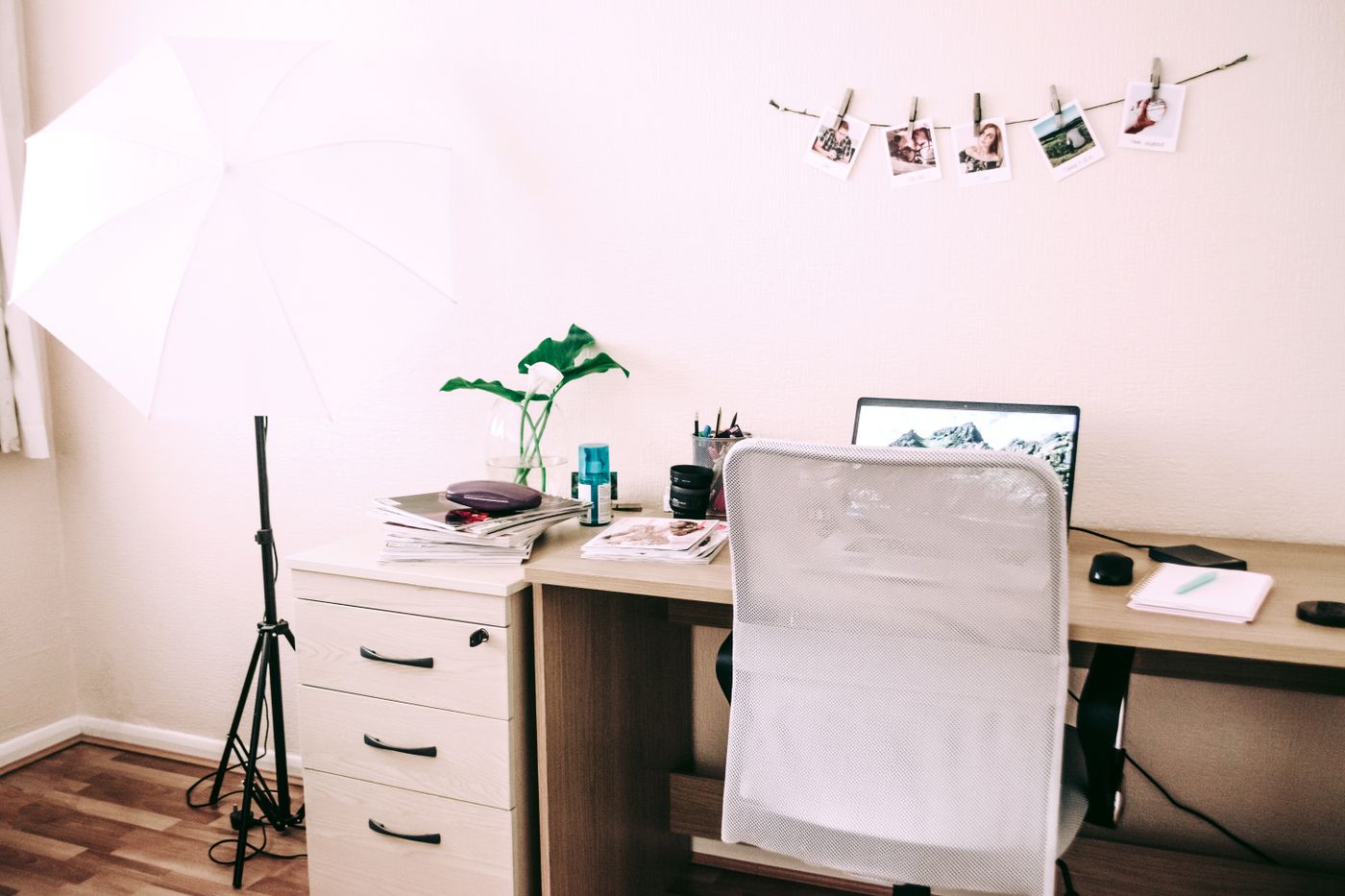
The hotel marketing photo will show you the lobby and the pool. It will almost never show you the desk. Before you book, send a short message and ask the questions that actually matter to a working guest.
- Is there a proper desk and a chair with back support in the room, or only a lounge chair and a coffee table?
- What is the in-room Wi-Fi speed, and is there a wired connection or a dedicated business lounge?
- Can you place me on a quiet floor, away from lifts, ice machines, construction and event spaces?
- Are early breakfast and late check-out available for my working hours?
- Is there a coworking room, meeting room or private cabin I can book by the hour?
Serviced residences are often the best value for stays longer than a week. You get a kitchen, a separate working area and a washing machine, with hotel-level housekeeping and security. For shorter trips, a high-end city hotel with a strong business floor is usually better than a remote resort, because the infrastructure is built for people who work. Resort workations are wonderful, but choose them for the second week of a trip, after the heavy deadlines are done.
The rise of luxury co-living
Co-living has grown up. The early model was shared dorms and hostel-style lounges. The newer luxury end looks like a boutique hotel with private suites, a dedicated coworking floor, a gym and community dinners, aimed at founders and consultants who want privacy and also want to meet other serious people. If you travel alone and value conversation, this can be the most productive environment you will find. If you prefer silence, keep your own suite and use the community spaces only when you want them.

A coworking space: the community floor that luxury co-living adds to a private suite. Photo: Wikimedia Commons (author and licence on the file page).
Moving between hubs: turn transit time into working time
Most of a nomad’s lost productivity happens in transit: the queue for a taxi, the confusion over a meeting point, the call taken on a noisy platform. A private transfer solves the part that is under your control. I recommend pre-booking a chauffeured car through GetTransfer for the airport arrival and for longer hub-to-hub legs. You agree the route and the vehicle in advance, the driver tracks your flight, and the back seat becomes a quiet, private room where you can take a call or finish an email thread.
Ground transport
A note on lounges: airport lounge access is arranged separately, usually through your airline status, a premium card or a lounge programme. If a call or a deadline is likely to fall in an airport, check the lounge options for your terminal before you fly, and book the car so that you arrive with time to settle in. Together, the lounge and the pre-booked transfer give you two calm, private spaces on the days that are normally the most chaotic.
Balancing deep focus with real sightseeing
The classic mistake is to promise yourself you will see everything and work normally. You will do neither. The rhythm that works for most of the executives I have advised is simple and repeatable.
- Protect your best hours. Do your hardest thinking in the first four hours of your day, when you are fresh and the destination is quiet.
- Schedule sightseeing like a meeting. Put one anchor experience in the afternoon or on a weekend, with a start and finish time.
- Book the anchors in advance. Skip-the-line tickets, guided tours and desert or island excursions are easier and often cheaper when reserved ahead through platforms such as Klook.
- Keep one buffer day per week. Time zones, delays and surprise deadlines will use it, and you will be glad it is there.
Time zones deserve special attention. If your clients are in New York and you are in Dubai, your best calls may fall in the evening. Plan your sightseeing in the cooler, quieter morning hours and keep the afternoon for rest before the evening block. The cities that suit this rhythm best are those with strong infrastructure and short transfers. Dubai is a good example, and you can read my Dubai winter guide for how I structure a trip there. The Maldives work well at the other end of the scale, as a deliberate reset after a deadline, as I explain in the overwater resort guide.
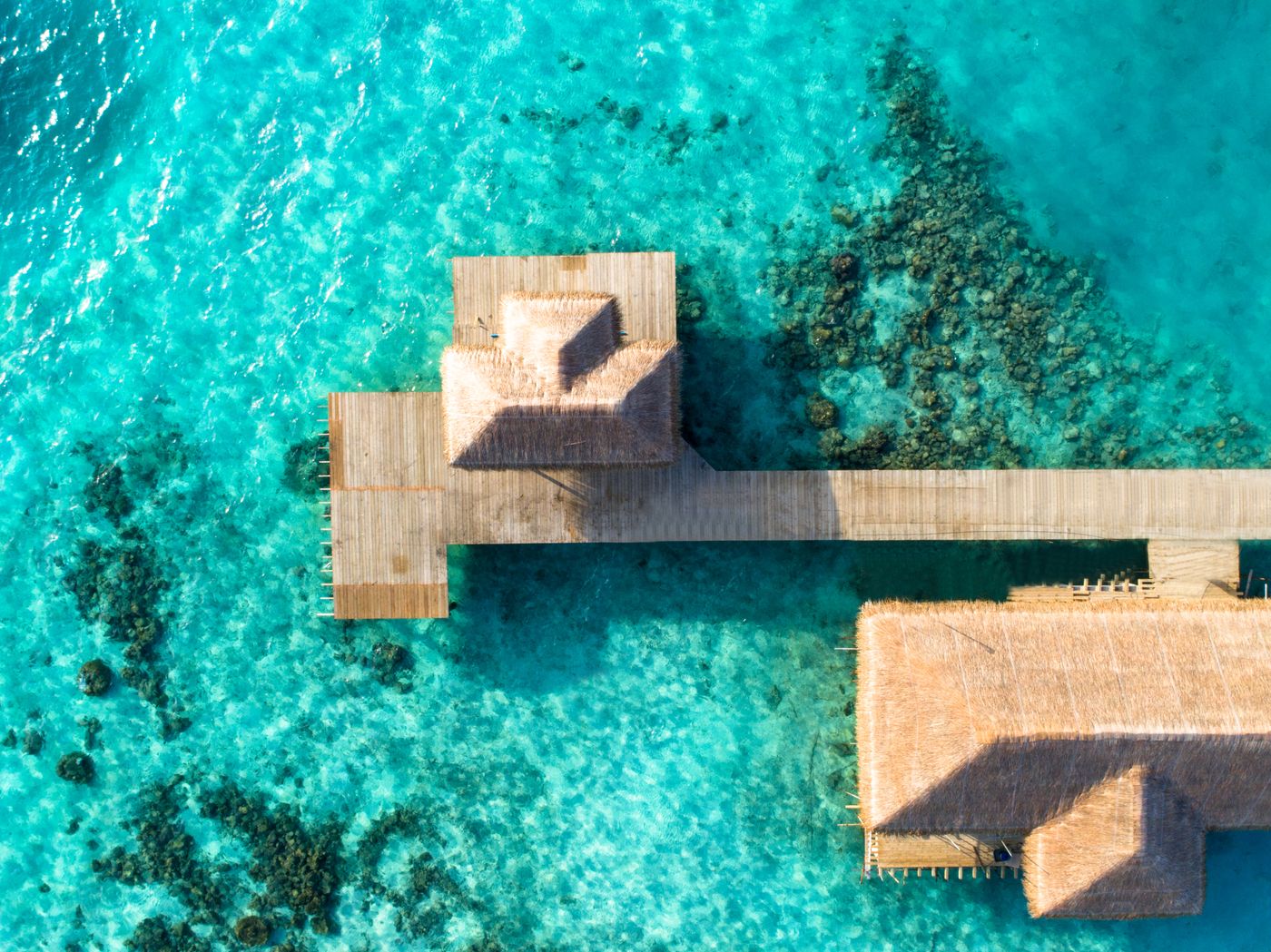
The Maldives as a deliberate reset after a deadline. Free image from Pexels.
Admin that protects your trip
Luxury is quiet when the paperwork is in order. Before you commit to a long stay, confirm the current entry and visa rules for your nationality on the destination’s official government website. Some countries offer remote-work visas, and the requirements for income, insurance and duration change regularly. Carry digital and printed copies of your passport, visa, insurance and bookings. Make sure your travel insurance covers laptops and work equipment, and keep your key accounts protected with a password manager and two-factor authentication that does not depend only on SMS.
Finally, build in redundancy for the single points of failure. Two ways to get online, two ways to pay, a second charger, a power adapter for the country you are visiting and a printed address of your accommodation. None of this is glamorous, and all of it is what makes the glamorous parts possible.
The essential tools for remote luxury professionals
| Need | Recommended tool | Why it matters |
|---|---|---|
| Mobile data abroad | Yesim eSIM | Install before departure and land connected; keep your home SIM for calls and bank texts. |
| Private airport and hub transfers | GetTransfer | Pre-agreed route and vehicle, with a quiet cabin for calls between hubs. |
| Experiences and skip-the-line tickets | Klook | Reserve anchor activities in advance so sightseeing fits around work. |
| Airport lounge access | Airline status or lounge programme | A calm place for calls before boarding; check your terminal before you fly. |
| Workspace | Serviced residence, business-floor hotel or luxury co-living | Ask about desk, chair, Wi-Fi speed and a quiet floor before booking. |
| Security | Password manager and app-based two-factor | Protects your accounts when you connect on unfamiliar networks. |
| Backup power | Power bank and local plug adapter | Keeps your phone and laptop alive on long transfers. |
A luxury workation done well is not about escaping your work. It is about building a setup that makes your best work possible somewhere extraordinary. Get the four dependencies right and the rest takes care of itself. If you would like a second opinion on a trip you are planning, you can reach me through the Work With Us page.
Disclosure: some links on this page are affiliate links. If you book through them I may earn a small commission at no extra cost to you. I only recommend services I would use myself; see the Disclosure page for details.